How I teach Spanish to kids aged 3–7: no pressure, through play, listening first
The way I teach your child (aged 3 to 7) is based on what research shows about how children this age learn languages. Here is what we do in class, and why.
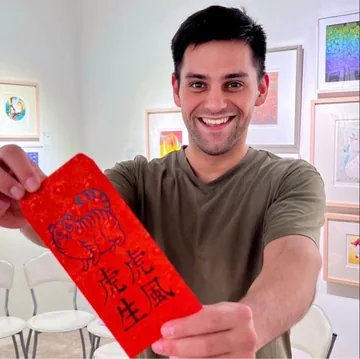
- Native Spanish speaker based in Taipei
- DELE certified (Instituto Cervantes)
- 120-hour TEFL/TESOL (Bridge TEFL)
- 3+ years teaching, 20+ hours every week
- Classes in Spanish and English
1. Less pressure, more learning
Linguist Stephen Krashen proposed that nerves or boredom make it harder to learn a language (the "affective filter": widely cited, but debated). Studies with primary-school children found that tests and speaking in front of others are what make them most nervous. So in my lessons there are no tests and I never force a child to speak: I want them relaxed and happy.
2. Children aged 3 to 7 learn through play
Classic developmental theories (Piaget, Vygotsky) propose that at this age children learn by doing and playing, supported by an adult. A 2022 analysis combining studies of children aged 1 to 8 found that "guided play" (the child chooses, the adult joins in with a goal) did as well as or better than direct teaching (those studies were not about languages).
3. Understand first, then speak, write last
It's the same order in which children learn their first language. At this age the goal is understanding and speaking; they are just starting with Zhuyin and Chinese characters, so reading and writing in Spanish can come later, with no rush.
4. Movement helps remember words
James Asher created Total Physical Response (TPR) in 1969. Newer studies with children aged 4 to 6 (France 2008, Australia 2015) found that words learned with gestures or whole-body movement were remembered better, even weeks later. They were small studies with only a few words.
5. In their play space, as a playmate
Usually I go to the place where your child plays and we play together as playmates, but with a plan: each lesson has words and phrases I want them to hear many times. In a familiar place, with no classmates watching, children tend to be calmer and more willing to listen and speak.
What does a lesson look like?
We do what your child enjoys, and I speak as much Spanish as I can: with gestures and signs so they understand and, when needed, saying things in both languages. If they like books, we read together; if they're into painting, we paint. They listen, play and respond with their body first, and speak when they're ready. In my experience, most children get used to playing in Spanish very quickly and have fun; every child has their own pace.
How can parents help?
Children love doing what their parents do. I always recommend that parents study a little Spanish themselves and show interest; you don't need to be good at it. You can also look at your child's progress together and let them teach you words; your child may end up teaching you! More ideas for home are in the parents' guide below.
Price of at-home lessons
In Taipei, in your child's play space: NT$900 per hour, minimum 2 hours per lesson (because of travel time, about 30–40 minutes each way).
Sources
Krashen, S. (1982). Principles and Practice in Second Language Acquisition. · Piaget, J. (1951). Play, Dreams and Imitation in Childhood. · Vygotsky, L. S. (1978). Mind in Society. · Asher, J. J. (1969). The Total Physical Response Approach to Second Language Learning. The Modern Language Journal, 53(1). · Tellier, M. (2008). Gesture, 8(2). · Mavilidi, M.-F. et al. (2015). Educational Psychology Review, 27(3). · Skene, K. et al. (2022). Child Development, 93(4). · Nilsson, M. (2019). Apples, 13(2). · Byers-Heinlein, K. & Lew-Williams, C. (2013). LEARNing Landscapes, 7(1). These are widely used theories and studies in language teaching; almost none are about Spanish or children in Taiwan, and some were done with older children or adults. Every child is different, so I adapt to how yours responds.
📘 Download the parents' guide (PDF): children aged 3–7
📗 Parents' guide for ages 1–3 (PDF): Spanish at home from age one
FAQ
Do they need homework?
No. At 3 to 7, children understand first and then speak; reading and writing come later.
What if my child is shy and doesn't want to talk?
That's fine. I follow their lead: we do what they enjoy, I give them space and never force them to speak. Many children spend a while listening before they speak; with a few hours a week it's normal to understand a lot before saying much.
Isn't two hours too long for a young child?
Usually not. We play, it's not sitting in a class: during the two hours we switch games, move around and have quiet moments; if they get tired, we slow down. In my experience, they have fun and the time flies.
How much is an at-home lesson?
NT$900 per hour, minimum 2 hours per lesson (Taipei).
Do parents need to speak Spanish?
No. Your encouragement, and making Spanish a small part of everyday family life, matter more than your level.
Will Spanish confuse my child or slow down their Chinese?
Research shows that learning two languages doesn't confuse children or slow down their first language, and mixing words is normal. Chinese stays the main language at home.
Will my child become bilingual?
With a few hours a week, the goal is understanding, everyday phrases, a good ear for Spanish and enjoying the language; becoming bilingual takes much more exposure.